

 Our Stories
 Photo / Video


 Donation
 Sponsorship
 Volunteers



Pioneering Digital Dementia Care: New Assessment and Therapy Programme for Older Adult with Sight Loss
As population ageing accelerates, the need for dementia services continues to rise. Older adults with visual impairment face particularly complex challenges in cognitive assessment, communication support, and therapeutic intervention.
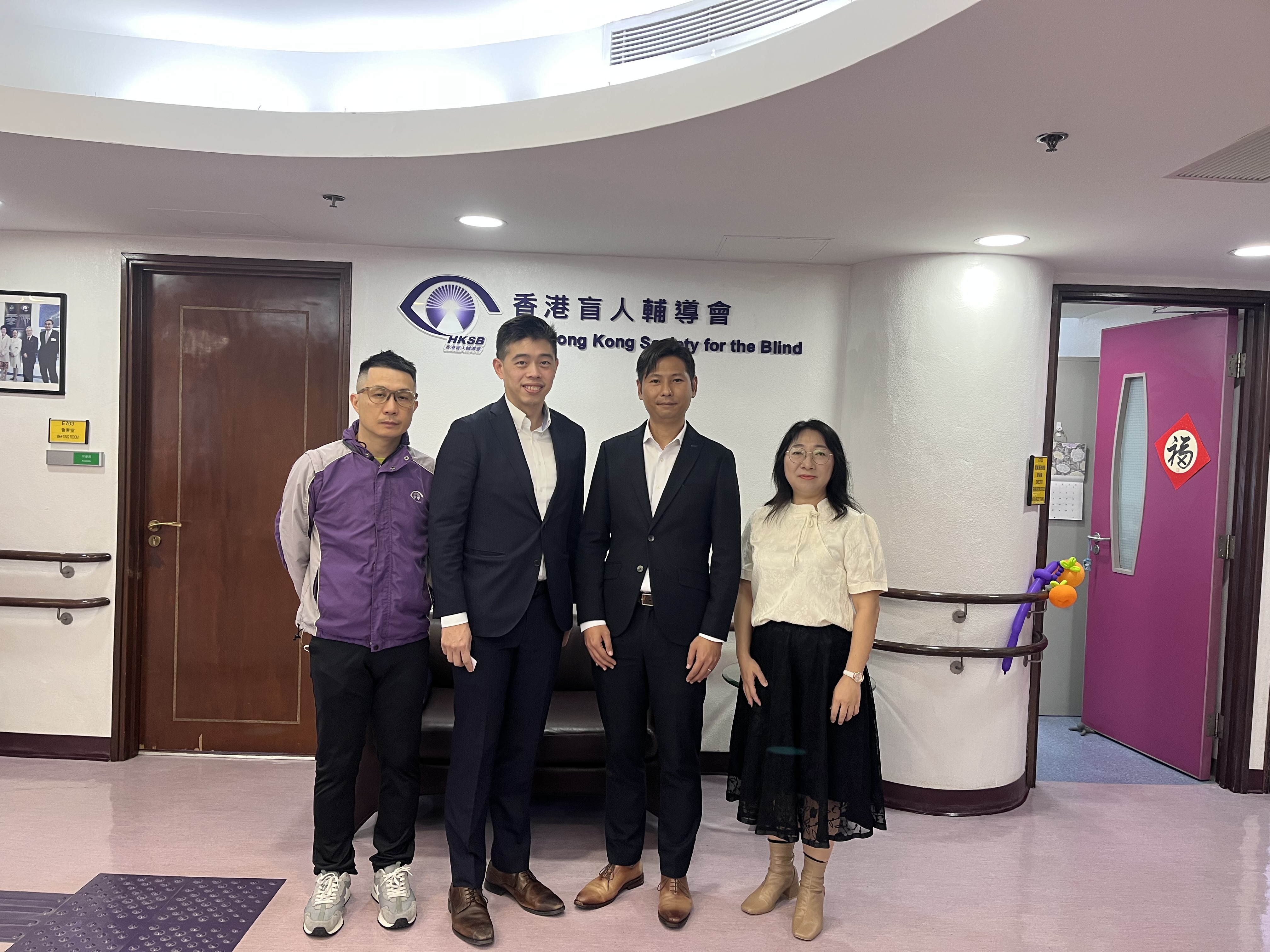
In response, we are proudly launching the Innovative Digital Assessment and Intervention Programme for Dementia in Persons with Visual Impairment, which integrates research, clinical practice, and interdisciplinary collaboration to usher in a new era of cognitive healthcare for this population.
Recent research confirms that visual impairment not only affects daily functioning but is also a potentially modifiable risk factor for development of dementia. When visual impairment coexists with cognitive decline, older adults are more vulnerable in daily living, social participation, and self-care. This highlights the critical importance of incorporating both visual function assessment and cognitive assessment observation into residential care.
Championing Early Assessment and Intervention for Visually Impaired Older Adults
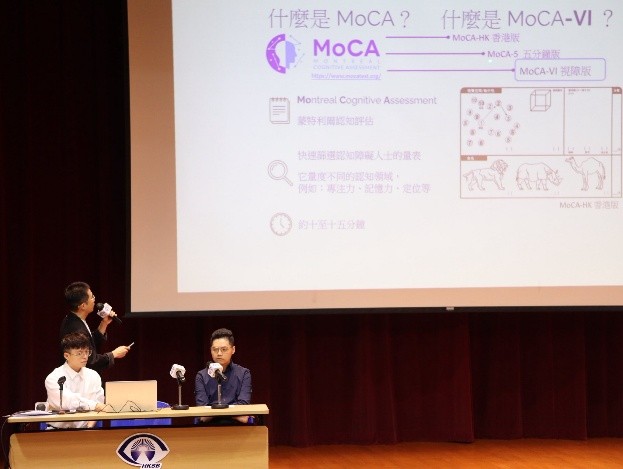
The HKSB Occupational Therapy Research Team has been actively developing cognitive screening tools tailored for visually impaired older adults. The Hong Kong version of the Montreal Cognitive Assessment for Visual Impairment (HKMoCA-VI), for example, has established locally validated cut-off scores for residential care settings and demonstrated strong correlation with standard cognitive measures. These findings emphasize the need for assessment methods that accommodate sensory limitations, preventing underestimation of true cognitive abilities due to visual impairment.
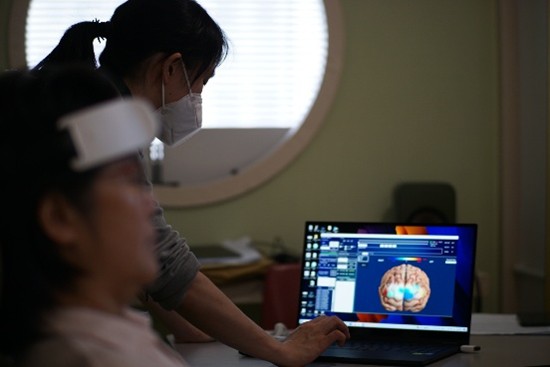
On the technological perspective, functional near-infrared spectroscopy (fNIRS) has gained prominence in dementia research. It can help identify mild cognitive impairment and early brain functional changes, providing objective markers across different cognitive states. As a non-invasive, portable, and clinically feasible technology, fNIRS is especially well suited for assessment settings in residential care and community environments.
The Digital Assessment Programme will run from 1 May 2026 to 31 August 2028. Led by the Residential Services Occupational Therapy team, the project collaborates with Professor Roger Ho and Dr. Li Zhifei from the Department of Psychiatry at the National University of Singapore, this project will integrate fNIRS, cloud computing, and signal processing technologies, and will be jointly advanced by a cross-regional, cross-disciplinary research team. Team members include Dr. Lau Hin Chung, Department of Biomedical Engineering, The Hong Kong Polytechnic University. Dr. Winsy Wong, Research assistant professor of Department of Language Science and Technology, Faculty of Humanity, The Hong Kong Polytechnic University, Dr. Calvin Yip and Dr. Ben Yip of School of Medical and Health Sciences, Tung Wah College, Dr. Michael Kuo, Associate Professor (Occupational Therapy), The Education University of Hong Kong, Dr. Tan, Associate Professor (Occupational Therapy), Singapore Institutes of Technology and The Hong Kong Yan Chai Hospital Social Services Department is also a key partner.
The programme aims to establish clear discriminative benchmarks among healthy ageing, mild cognitive impairment, and dementia for both visually impaired and non-visually impaired older adults in Hong Kong, thereby creating a more precise digital assessment framework. Through cross-regional, interdisciplinary, and inter-organizational collaboration, we will enhance early screening accuracy and deepen our understanding of cognitive changes across populations, laying the foundation for individually tailored treatment strategies for visually impaired older adults in the future.
“Neuromodulation” refers to non-pharmacological interventions that regulate brain activity to enhance or stabilize function in specific brain regions, thereby alleviating symptoms. With the generous support of the Teh Chi Khun Charitable Foundation, the Society has introduced the NEUROLITH Transcranial Pulse Stimulation (TPS) digital therapeutic system for the non-drug treatment of Alzheimer’s disease. This initiative is further strengthened by the professional support of Professor Calvin Cheng, Psychiatrist from the Department of Psychiatry at The University of Hong Kong, advancing our Digital Intervention Programme. This milestone marks our progress toward establishing a comprehensive care pathway from assessment to intervention in dementia services for older adult with sight loss.
The Hong Kong Society for the Blind firmly believes that the true value of innovation lies in its ability to meet the real needs of service users. Moving forward, we will continue to uphold the principles of person-centred care, evidence-based practice, and interdisciplinary collaboration. We remain committed to advancing cognitive health, mental well-being, rehabilitation support, and high-quality residential care for visually impaired older adults, forging a more forward-looking and sustainable model of residential service for Hong Kong.